The Wine Stain Guide to World Cup Football
...for anyone who enjoys footie, wine, or wondering how the two became so closely acquainted.

Kick-Off
Every four years, a few rather remarkable things happen.
A leap day quietly appears in the calendar.
The Olympic flame is lit. Presidential campaigns begin.
And billions suddenly develop strong opinions about formations, referees and countries they’ve never previously supported, including countries they supported passionately four years ago and haven’t thought about since.
Cities become quieter whilst Pubs become louder.
Entire nations rearrange their sleep schedules around kick-off times. Otherwise-sensible adults suddenly become experts on the offside rule.
The FIFA World Cup is the largest sporting event on Earth.
Wine, strangely enough, does something remarkably similar.
Both are expressions of place, and both inspire fierce loyalty.
Both produce endless debates that nobody ever truly wins.
Both have an extraordinary ability to bring complete strangers together.
Both reward patience.
So, while everyone else was studying squad selections...
...we started looking at the vineyards.
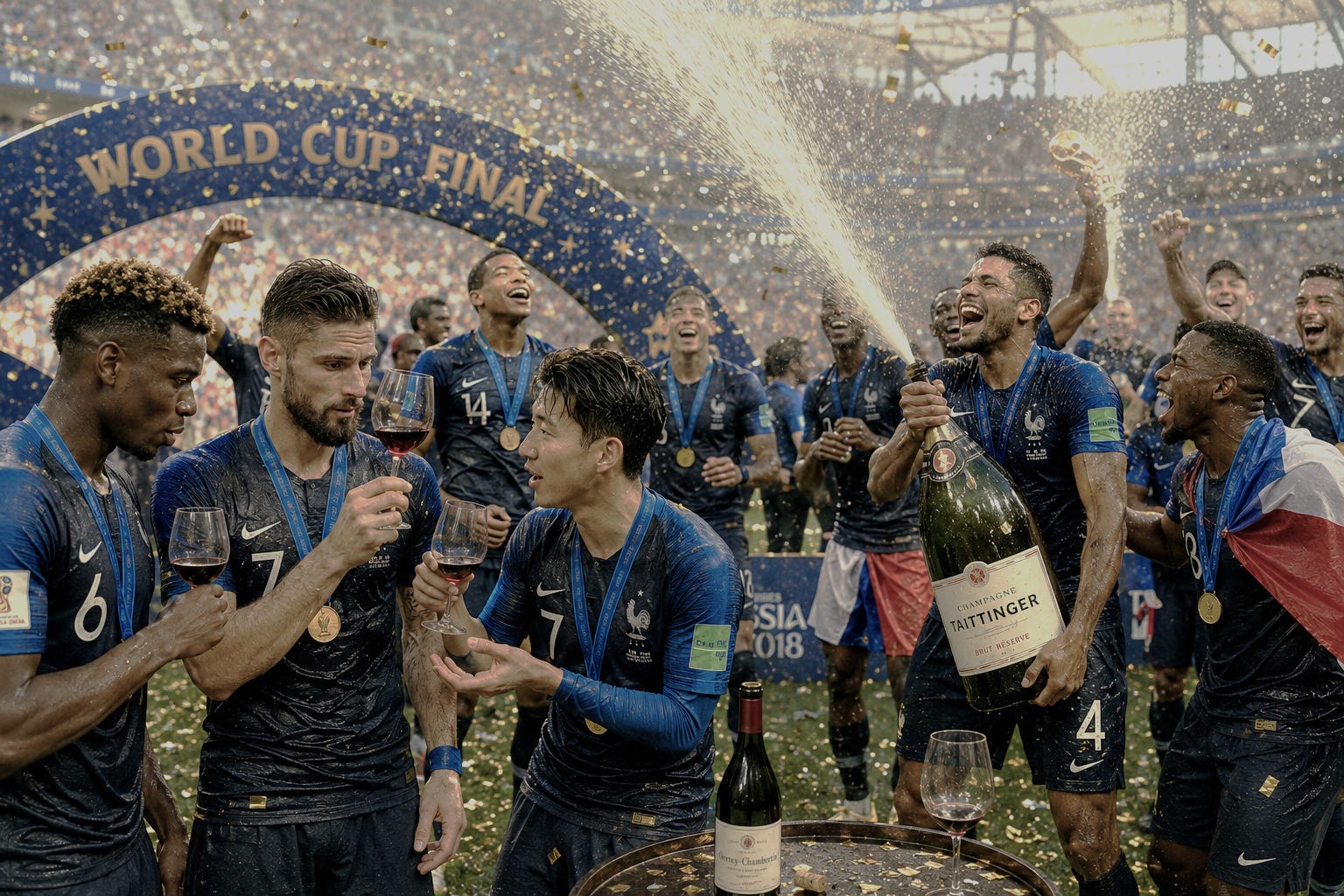
A Brief History
Football has existed in one form or another for thousands of years.
Ancient China had Cuju, a military training exercise dating back more than 2,000 years in which players attempted to kick a leather ball through a small opening suspended between bamboo poles without using their hands. Unlike American Football, where players use their hands more than their feet. Many historians consider it the earliest documented ancestor of modern football.
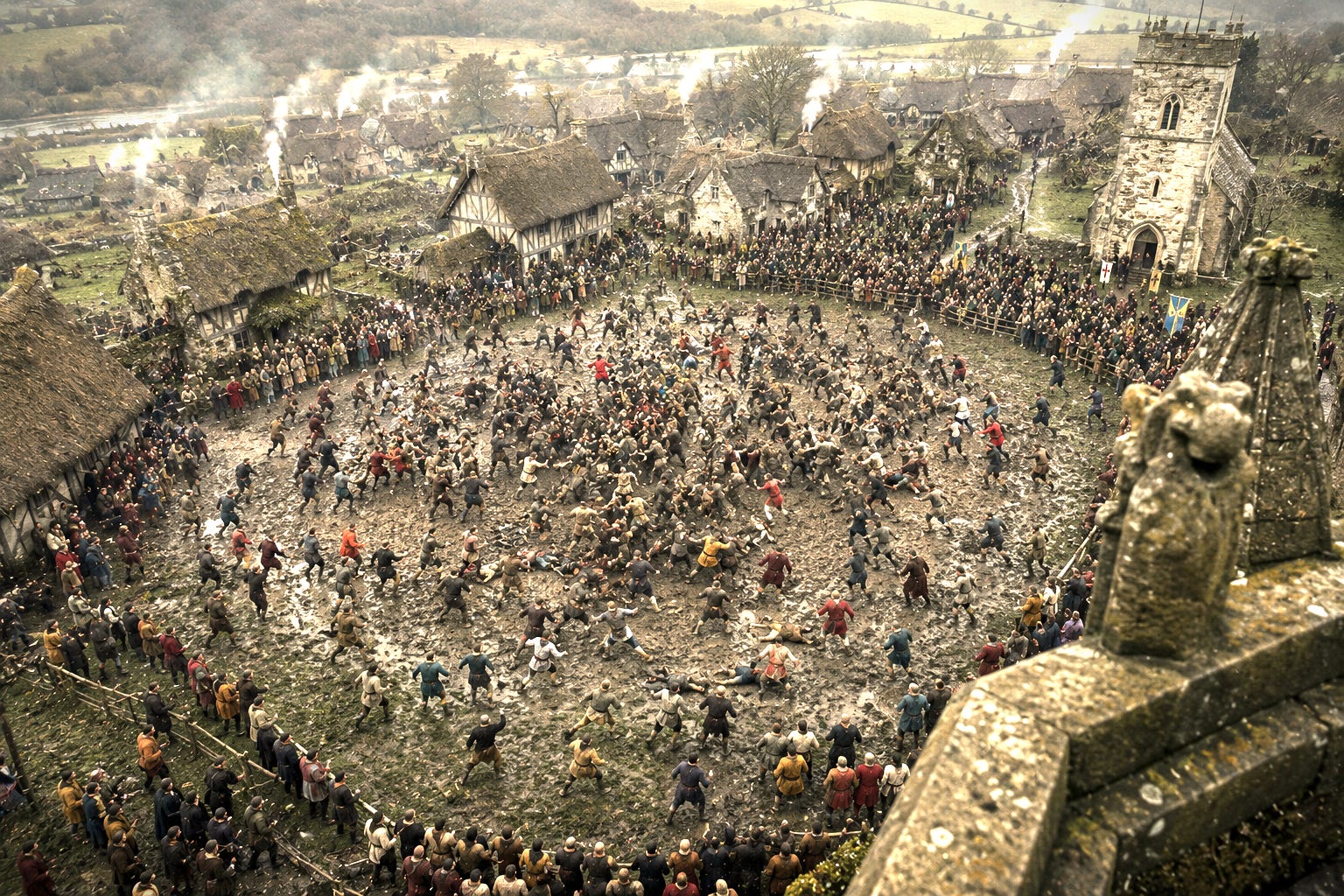
Medieval England, meanwhile, preferred a rather less refined approach.
Entire neighbouring towns would take part in enormous annual contests known today as Mob Football. There were no fixed team sizes, very few rules and almost no regard for personal safety.
The “ball” was often an inflated pig’s bladder wrapped in leather, and the objective was simply to drag, kick, throw or somehow propel it to a distant landmark. Sometimes the opposing village church, bridge or market cross. Broken windows and bones were common…many tried to ban the game.
By the nineteenth century, England had finally done what England does best: organized the chaos. In 1863, the newly formed Football Association codified the rules of Association Football and gave the world the game we recognize today. The first FIFA World Cup followed in 1930. The host nation? Uruguay.
Every World Cup Winner Is a Wine Country
During our entirely unnecessary and dubious research, one statistic refused to leave us alone.
Every nation to have won the FIFA World Cup also produces fine wine.
Uruguay. Italy. Germany. Brazil. England. Argentina. France. Spain.
Is it a coincidence? Almost certainly.
Is it evidence that vineyards create better midfielders? No, that’s absurd.
Is it evidence that many of football’s greatest nations also possess deep agricultural traditions, centuries of regional identity and remarkable wine cultures? Yes, absolutely.
If They’re Playing… Here’s What Should Be in Your Glass
Supporting your country is one thing. However, supporting it properly is another.
Argentina: Everyone reaches for Malbec and that is great but try Cabernet Franc from the Uco Valley. We love the Ver Sacrum wines.
France: Bordeaux for victory. Burgundy for defeat. Champagne regardless.
Spain: Open Albariño from Galicia or Xarel·lo from Catalunya for a change. Hold Rioja for a late-night after match dinner.
Portugal: Douro, Barriada, then Vinho Verde.
Germany: Riesling from anywhere and everywhere. Drink Riesling.
Uruguay: It also happens to be a wine-producing nation. Think Tannat.
The other Madiran. Drink Bodega Garzon. Then try it again.
Brazil: Have a Brazilian. then, after the waxing, drink their sparkling wine.
The Transfer Window
Every football supporter knows the transfer window.
The window opens; the rumors appear hourly.
The journalists stand outside training grounds reporting that someone has “arrived for talks.” The supporters refresh their phones every thirty seconds.
Wine, it turns out, has its own transfer market.
Winemakers move between famous estates.
Footballers retire and become wine producers.
Vineyard managers cross continents.
Daniel Estrin, after seven years at Littorai, moved back to Oregon to become Winemaker and Vineyard Manager at Cristom. It felt like a promising academy graduate returning home after developing in Europe’s top league.
Then there are the owners.
In 2017, Arsenal owner Stan Kroenke completed one of the wine world’s biggest acquisitions when he followed his ownership of Screaming Eagle in Napa Valley by purchasing a majority stake in Domaine Bonneau du Martray, one of Burgundy’s most historic estates.
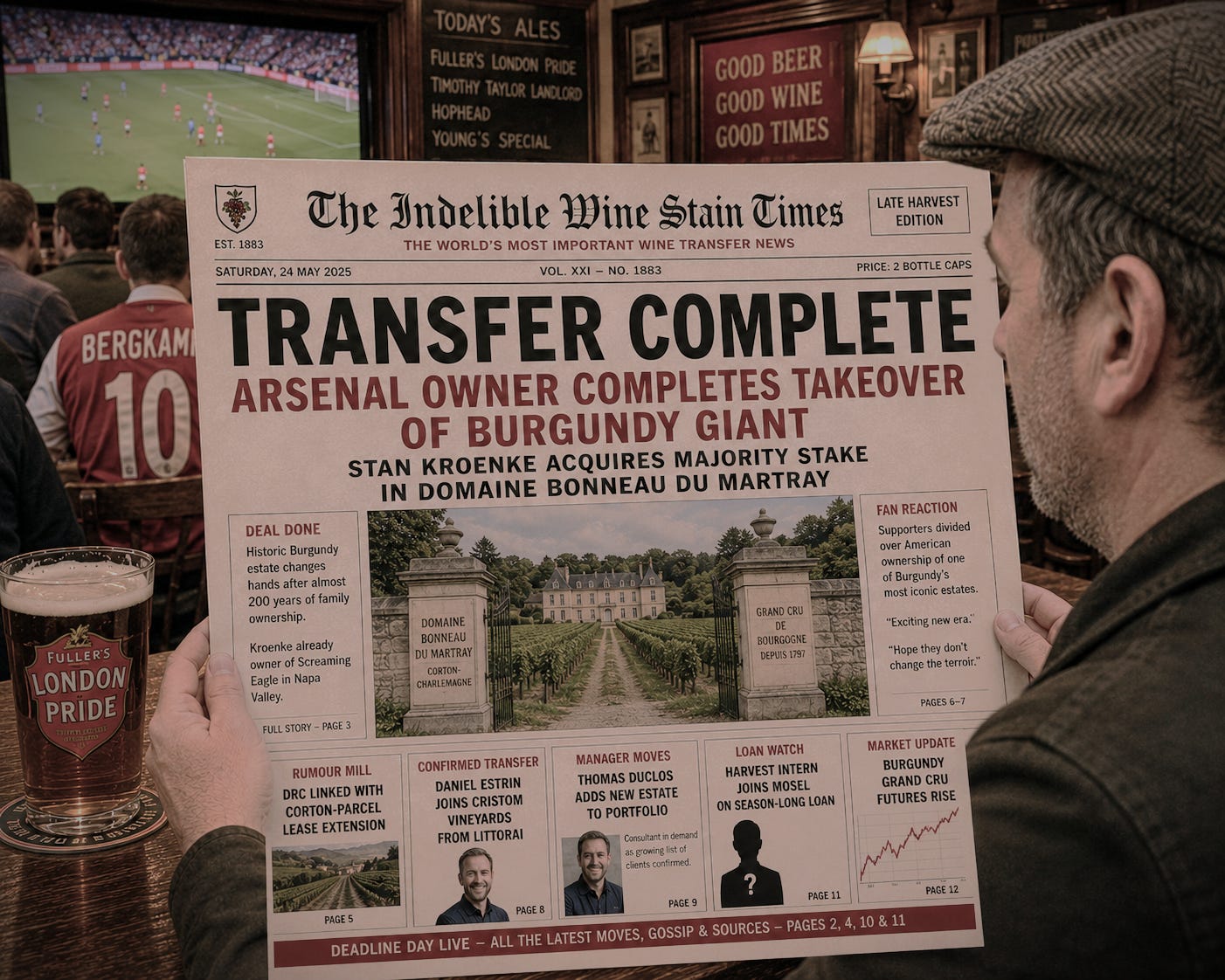
Perhaps football and wine have always shared the same language.
Only the names have changed.
Instead of center-forwards...there are consultants.
Instead of transfer fees...there are undisclosed acquisitions.
Instead of Deadline Day...there’s harvest.
The Final Whistle
Perhaps football and wine were never as different as they first appeared.
Both ask us to care deeply about place and reward patience.
They thrive on stories passed from one generation to the next and they both convince millions of otherwise sensible people that this year will definitely be different. After all, “this vintage is always the best vintage.”
P.S.
If your country was eliminated in the group stage, we’d recommend opening something mature.
If they won the World Cup...
...you probably already have.
COMING SOON...
The Official Indelible Wine Stain World Cup Wine Sticker Album
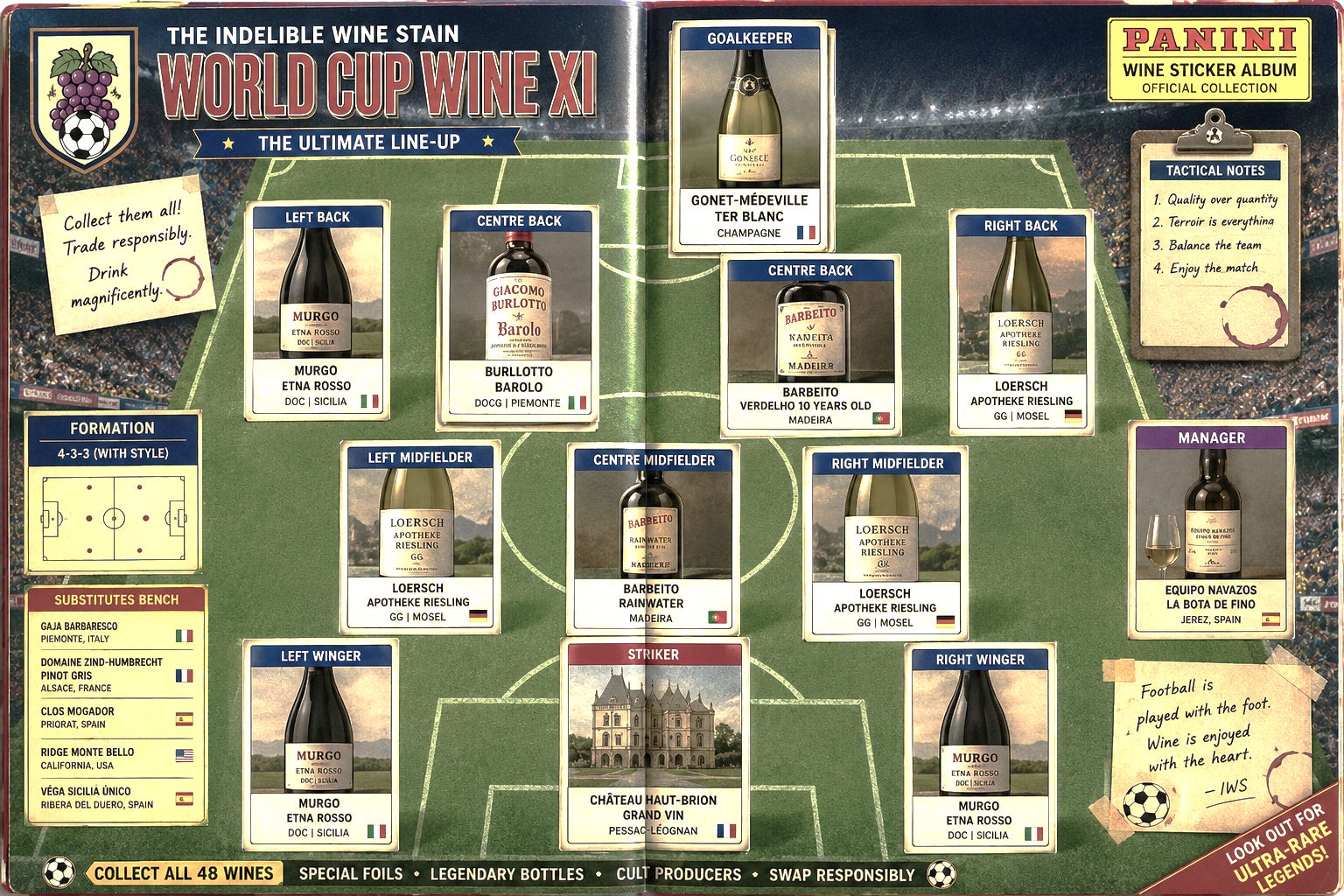
Collect all 48 wines. Find the Ultra-Rare Foil Legends.
Trade duplicates responsibly.
Includes:
⭐ Individual Sticker Cards
⭐ World Cup Wine XI
⭐ Transfer News
⭐ World Cup Wall Chart
⭐ Match Programs
⭐ Ultra-Rare Grand Cru Foils
“Remember to Swap responsibly.”
This advertisement come to you from Vindicator Creations.
Vindicator Creations is not responsible for any wine stains, wine addictions
or the sudden urge to acquire a vineyard. Please stain responsibly.
Vindicator Creations: Because True Luxury Knows No Bounds