What is the Wine Industry any who?
And more importantly...are you a part of it?

At some point during a cheeky tipple, someone, somewhere will say,
to somebody else…in an accent, because we all have an accent:
“I work in the wine industry.”
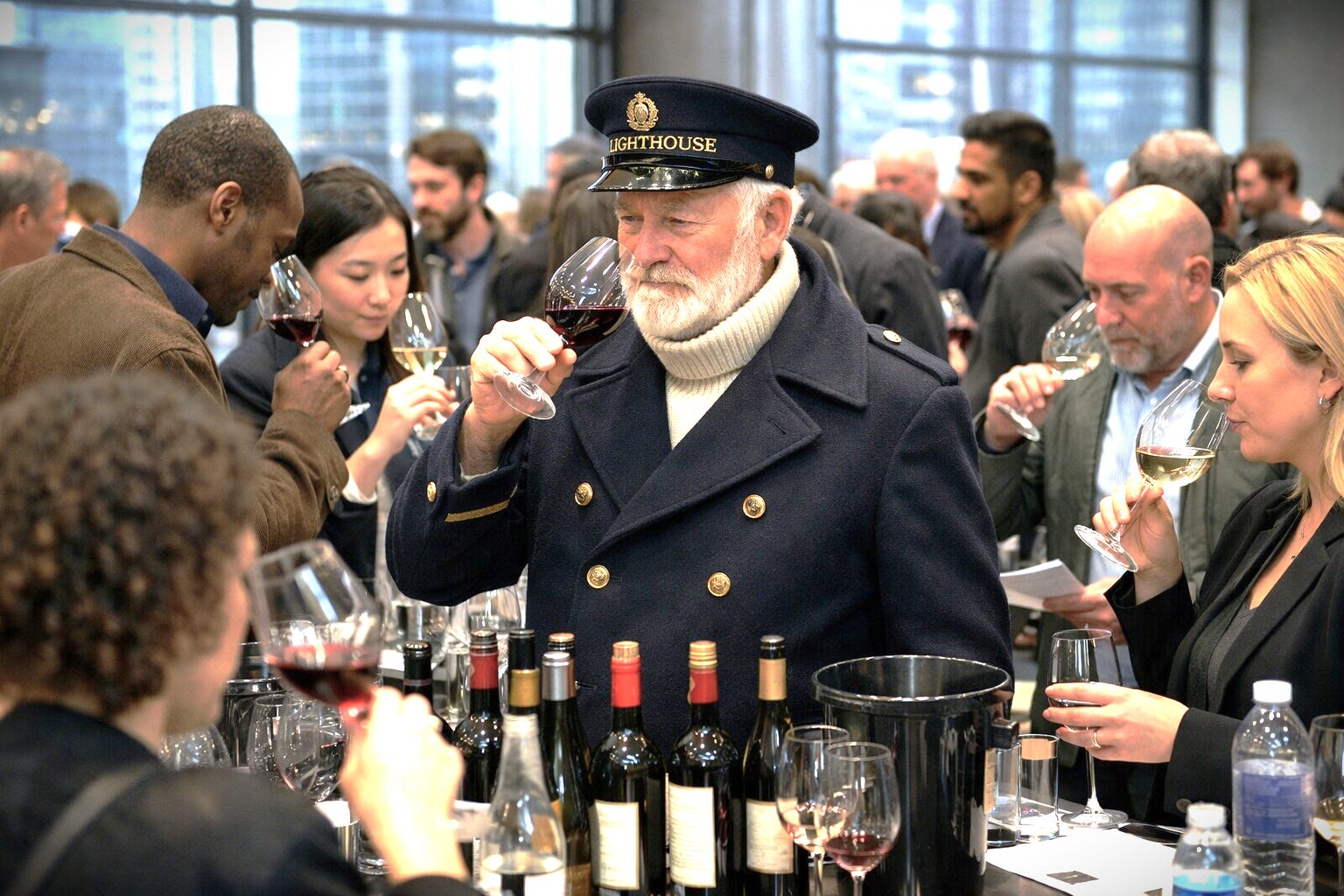
The statement is accepted immediately, like a man announcing he is a lighthouse keeper, despite there being no visible sea, house or light to keep.
No one questions them, nobody asks what it actually means.
Which is fortunate, because the longer one thinks about the phrase, the harder it becomes to locate the wine industry at all.
It has no headquarters.
No website, Insta-tube or TikTok dance associated with it.
No reception desk.
No laminated pass.
There is no moment where one remembers joining.
Yet there are those who are in it.
The obvious answer is that the wine industry consists of people who make wine and then there are others that sell it.
So, it seems, in that sense, to be a similar industry to Cocaine.
In some ways, yes.
But in many other ways, no - not at all the same…not at all.
So, let’s start with the Winemakers, then.
This seems correct in the way it seems correct to assume the orchestra is run by the violinists or the triangle player, at the back.
“Pling.”
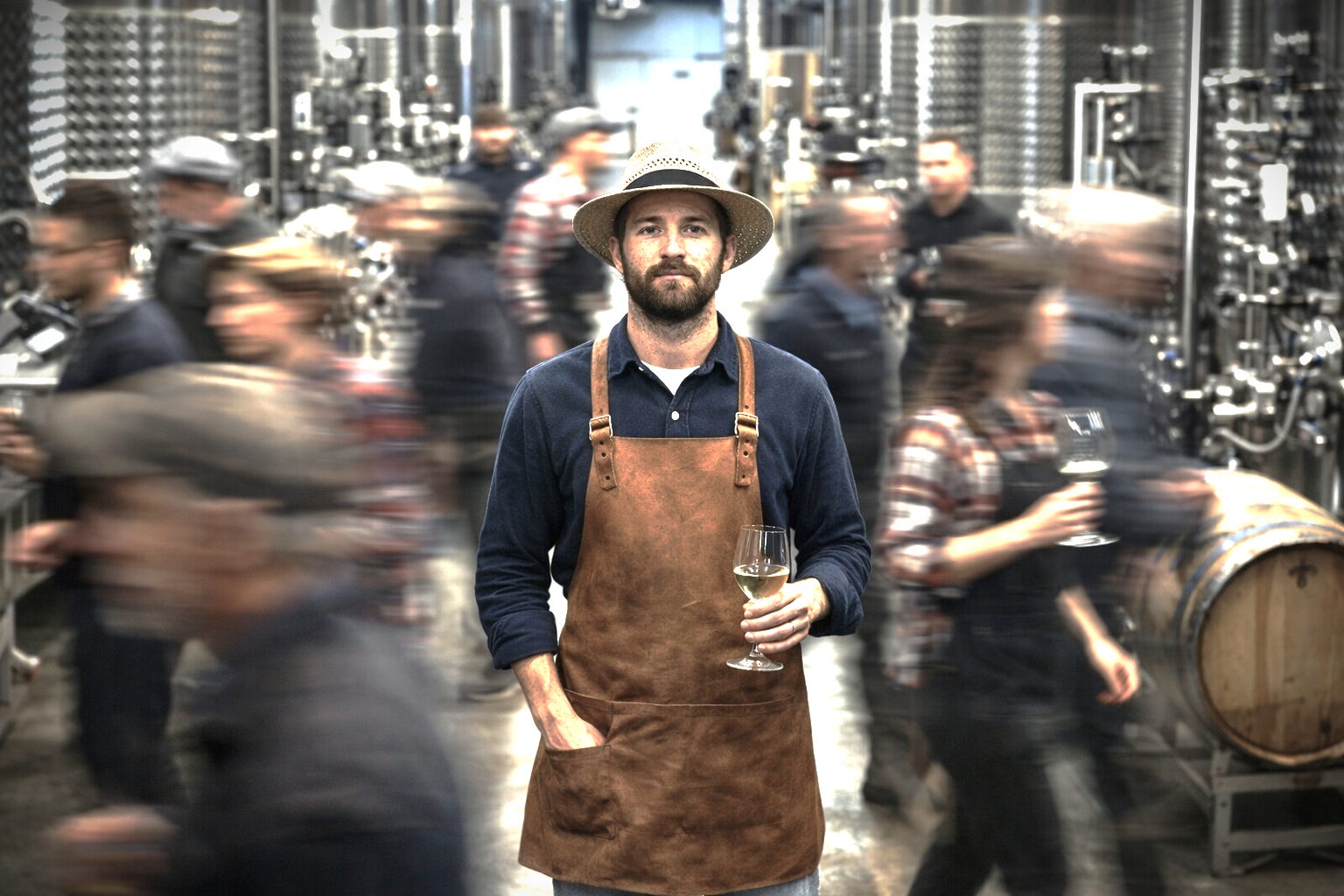
Winemakers are of course very important. After all, wine doesn’t make itself!
That would be crazy.
Although, according to Dr. Winestain, possible by the year 2047.
Around the Vignerons move vineyard workers, cellar hands, consultants, interns, seasonal crews who arrive like migrating birds.
Wine passes through dozens of hands, acquiring more fingerprints than the metaphorical orchestra that was previously used in this article, a few paragraphs back from here. You remember…
But there are more in the wine industry to have a good thank about.
There are those who manufacture the objects wine requires in order for it not to escape and run for the nearest drain, the escape plan being to head for the ocean. Blend in and disappear. A classic escape plan.
These people do not say they work in wine, they say they work in glass, forests or machinery. They are masters and mistresses of the bottles, cork and capsules, of the barrels, tanks and pipes.
Perhaps the industry begins once the wine leaves the winery.
The importers, distributors, logistics workers, customs officials, compliance specialists.
Wine travels the world with suspicious, suspiciousness.
Requiring stamps, signatures, inspections and occasional prayers.
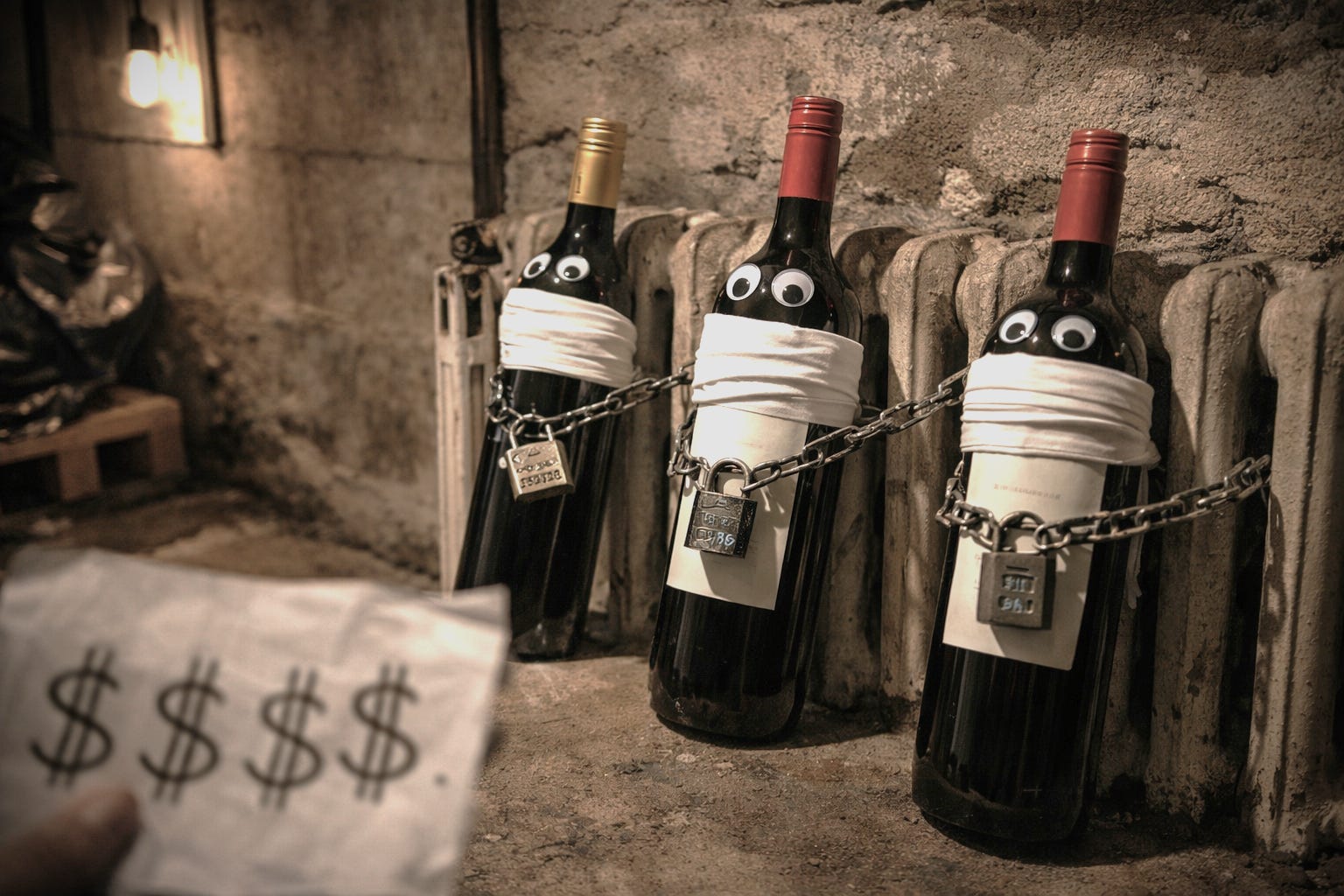
A delayed wine is described as ‘resting,’ in the same way a hostage is described as ‘comfortable.’ When the terms have been met, the wine will be released. Arriving to you traumatized and ready to negotiate a book deal about the experience.
Next come the translators.
The sommeliers, wine directors, retail buyers and wine merchants.
The portfolio managers and brand representatives.
They stand between vineyard, winery and drinker…like interpreters who speak fluent wine.
They explain not what the wine is or what we think of it as but what it would like to be thought of as when we think of it.
They do not sell the wine. It passes through their hands as the bottle competes with others for the coveted chance to be supped by you.
Instead, they present it, in the right light, in the right frame.
So that it can be bought.
Around them gathers the language trade of the wine industry.
The Writers.
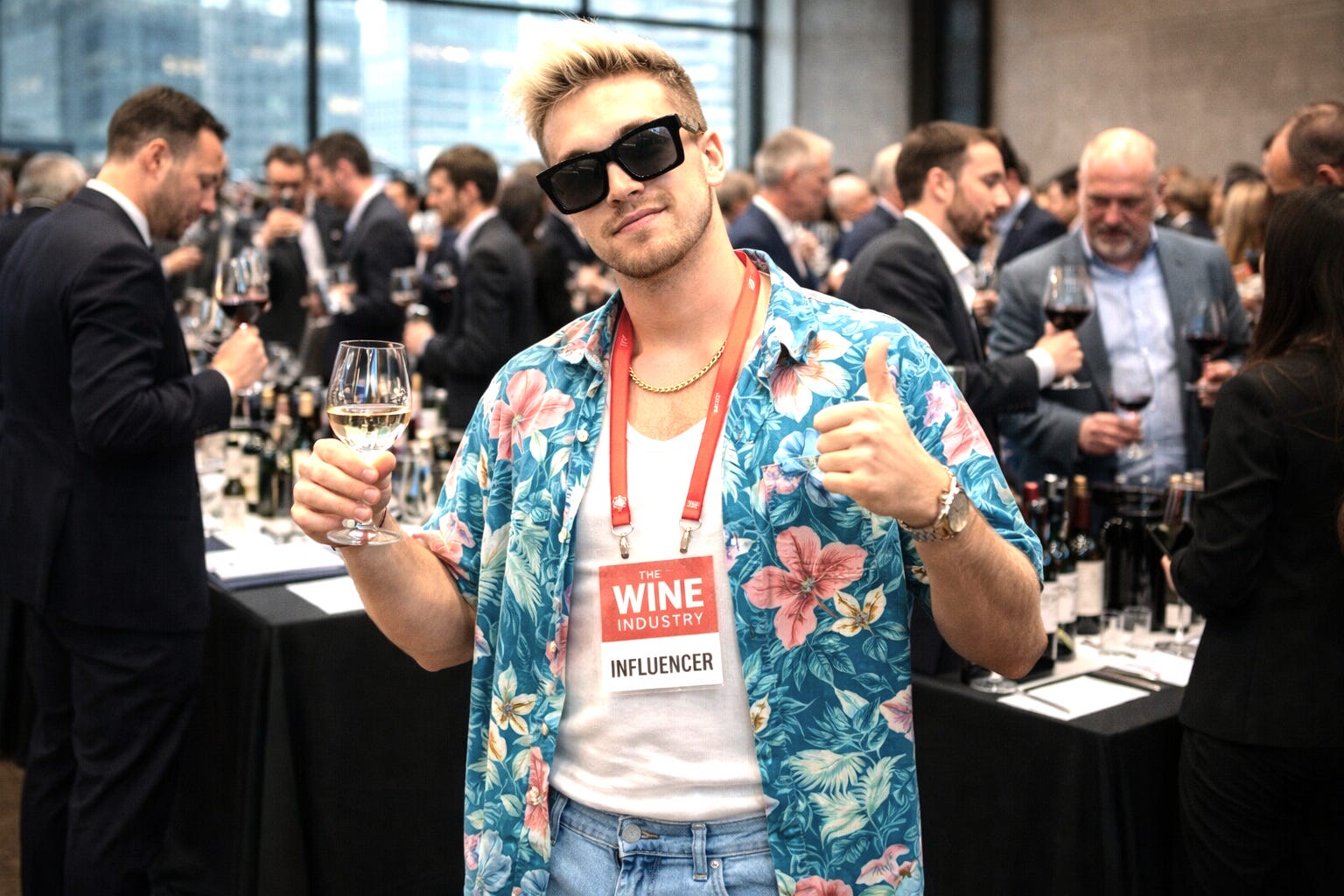
And among them the Critics, the Journalists, the Influencers.
The marketing agencies; operating behind the scenes like make-up artists.
Here, we often add personality to the character of the wine.
A vineyard becomes “historic,” as though older means better.
A vintage becomes “difficult,” as though it didn’t want to cooperate.
A wine becomes “serious,” which usually means it isn’t allowed to laugh.
Nothing here alters the liquid that is alive inside the bottle.
Everything here alters how you feel when you open it up.
Like a magic image, the more we stare at the wine industry, the more that the boundaries fall apart completely. This is the point at which it stops being something one can make a logo sticker of and stick onto somebody’s chest and starts behaving more like a smell.
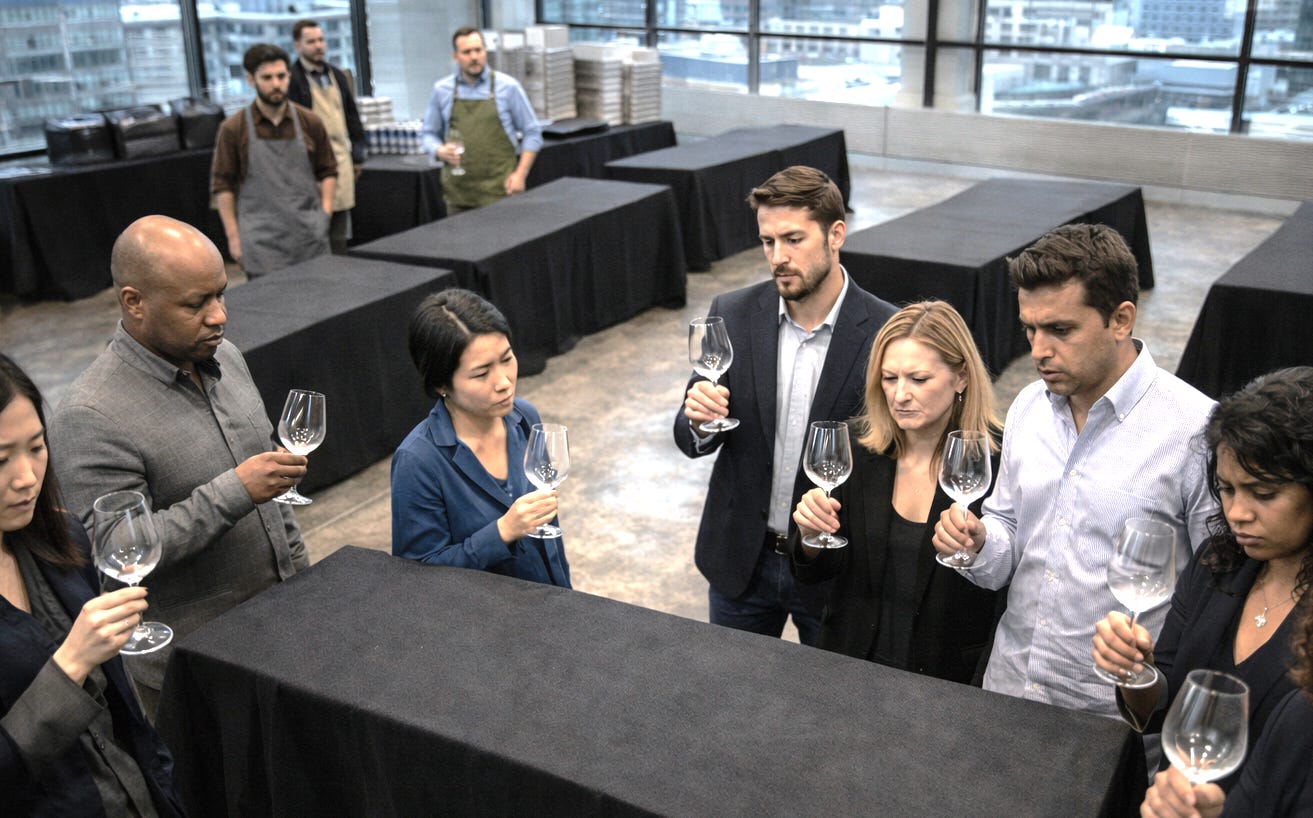
Because the wine industry also includes those who don’t drink wine.
The people who say, “I don’t drink,” as if extinguishing a small fire before it spreads to the net curtains.
Some say it apologetically and some say it proudly. Some as though they are announcing an allergy.
It includes those who have stopped.
Those who were harmed.
Those who once said, “just one glass,” and meant it sincerely at the time.
Those who are there to help us by creating laws, restrictions and advice on healthy living.
Even though sugar is just as much an addictive danger to our bodies as wine.
Hospitals. Governments. Public health authorities.
Committees who measure pleasure in units and publish charts.
“I had some units last night of a beautiful Assyrtiko. Louros. Santorini. From Hadzidakis.”
“Let’s go out tonight for a few units.”
They’re not invited to tastings, but are nevertheless present, like a smoke alarm in the corner of the room that gets set off when the net curtains are on fire, from the earlier metaphor a few paragraphs back. You remember…
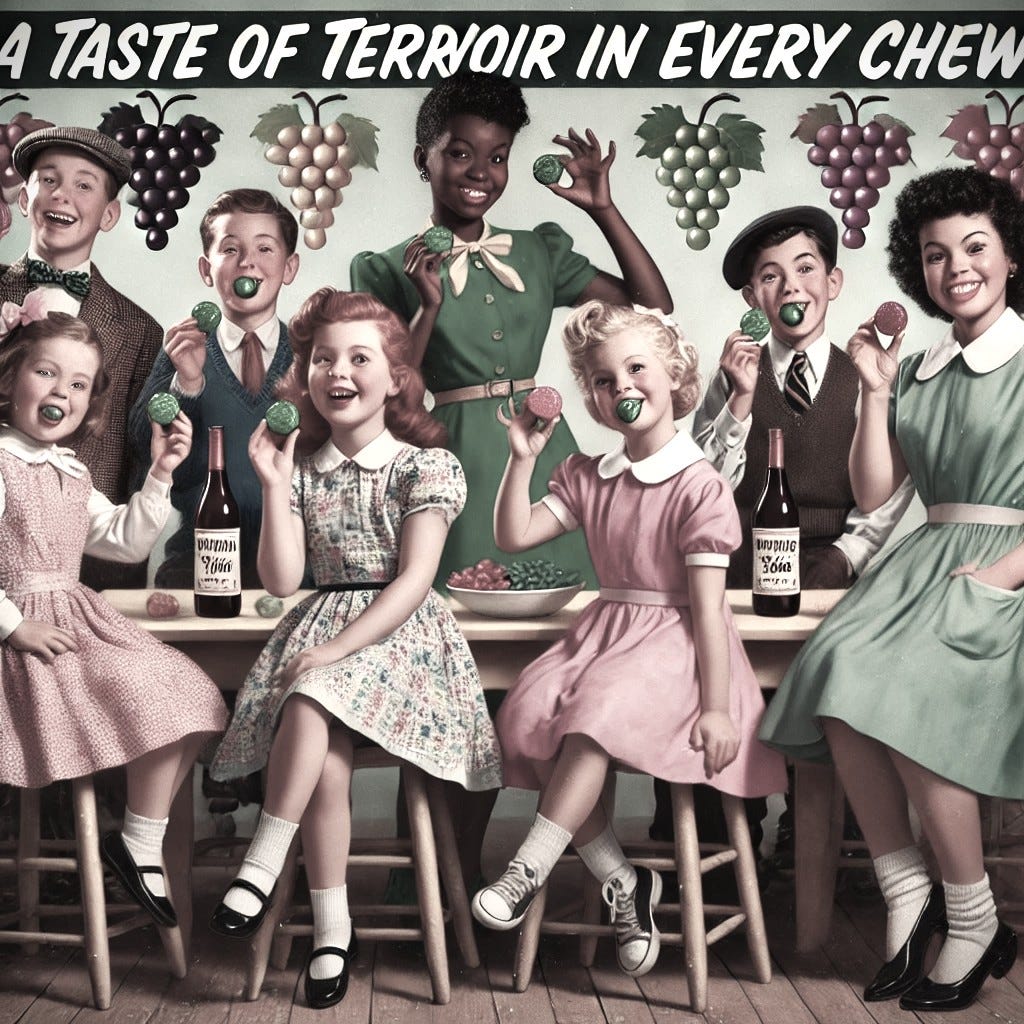
The non-drinkers, also an important part of the wine industry, also includes those who are not yet allowed.
The too young.
The future drinkers.
The pre wine industry.
The potential.
The faces on the pie charts.
They don’t drink wine, which is precisely why they matter.
Participation, it seems, may be unavoidable.
Because even refusal generates data and abstinence leaves a sober footprint.
Even walking past a wine shop without entering registers somewhere as interest postponed.
There it is.
The wine industry.
It involves drinkers and non-drinkers.
The too young and the not anymore.
Those who believe deeply, and those who insist this has nothing to do with them at all.
It is inclusive.
It has no headquarters. No receptionist.
No laminated pass. No signup sheet.
No moment where one remembers joining.
At some point, somebody, somewhere, will say: “I work in the wine industry.”
The statement will be accepted immediately.
Like a lighthouse keeper lacking sea, nobody will ask what they mean.
Partly out of politeness.
And partly because, by then, it would feel strange to pretend otherwise.
Because after all this staring, after watching the boundaries dissolve, the metaphors overheat and the net curtains quietly smolder, the answer has begun to smell familiar.
The Wine Industry.
It either exists or it doesn’t.
But if it does, we are all in it.